
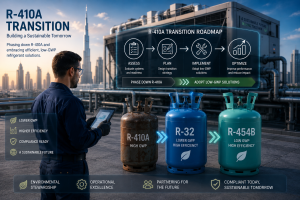
Let us start with the truth, because you deserve it plainly: the era of R-410A as the default refrigerant for residential and commercial air conditioning is ending. Not one day — it has already begun to end. Every month that passes, the supply of R-410A becomes smaller, the cost becomes higher, and the gap between the businesses that have prepared and those that have not becomes wider.
We are not saying this to alarm you. We are saying it because, in 30 years in this industry, we have seen what happens when businesses wait. We have also seen what happens when they plan ahead — and the contrast is stark. The contractors and facility managers who navigate this transition well will come out the other side with stronger businesses, better-trained teams, and client relationships that have been deepened by proactive, expert guidance. This blog is our honest attempt to give you that roadmap.
Start With What You Have
Before making any decisions about equipment or procurement, take a clear-eyed look at your current refrigerant position. Conduct a proper audit: what types of refrigerant do you hold, in what quantities, in what condition? Which equipment types rely on R-410A, R-22, R-404A, or R-134a? Which systems are approaching the end of their serviceable life, and which have years left?
This audit is not bureaucracy. It is the foundation of a transition plan that is specific to your business rather than generic. And it will immediately reveal where your most pressing decisions lie — which clients need to be having conversations now, which stock can be managed over time, and where your team’s training gaps are.
FrostChem Global FZE’s cylinder buy-back programme is designed for exactly this moment. Rather than holding legacy refrigerant stock that is losing value as supply contracts, you can convert it into credit toward the next-generation gases that your business actually needs. This is a practical, financially intelligent first step — and one that many businesses in the region are already taking.
Understand the New Refrigerants Honestly
There is a lot of marketing noise around the new refrigerants. Let us cut through it.
R-454B and R-32 are the two most relevant replacements for R-410A in the vast majority of residential and commercial applications in our region. Both are A2L refrigerants — meaning they are mildly flammable. That classification makes some people nervous, and we understand why. But the reality is that both refrigerants have been operating safely across Europe, Asia, and increasingly the Americas for years. The flammability risk is real but manageable with proper handling. It is a training issue, not a fundamental safety crisis.
- R-32 offers higher energy efficiency per kilogram, meaning you often need a smaller charge weight for the same cooling output. It has a proven track record across millions of installations worldwide.
- R-454B was specifically engineered to be as close to a drop-in replacement for R-410A as possible. Its pressure characteristics are familiar, which reduces the equipment redesign burden significantly.
- R-466A is a non-flammable A1-classified alternative under active development — worth watching, especially for applications where A2L handling feels challenging.
The honest advice: do not try to pick the ‘perfect’ refrigerant in the abstract. Understand the applications your business serves, talk to your equipment suppliers about their recommendations, and then choose the refrigerant that fits those applications best. We are always happy to have that conversation with you.
Invest in Your People — It Will Pay Back
The single thing that will determine whether your business handles this transition well or struggles through it is the training and readiness of your technicians. A2L refrigerants require updated handling procedures, and those procedures need to be second nature before your team works on live systems.
Technicians who are trained and confident with next-generation refrigerants are an asset that will define your competitive position for the next decade.
This is not an exaggeration. As new systems increasingly use A2L refrigerants, the contractors whose teams are certified and experienced will be the ones who win the service contracts. The ones who are not ready will be turning work away — or worse, attempting to service systems they are not properly equipped for.
Invest in the training now. The cost is real but finite. The return is ongoing.
Communicate With Your Clients Before They Come to You
Your clients who have existing R-410A systems are going to have questions — about servicing costs, about system life, about replacement timelines. The best time to have those conversations is before they feel urgent, not after. Reach out proactively. Explain the situation clearly and without alarm. Show them a timeline that makes sense for their situation.
Clients who feel guided through complexity by a supplier they trust become loyal, long-term clients. Clients who feel surprised by complexity they were not warned about look for someone else. The refrigerant transition is one of the best opportunities the HVAC and refrigeration industry has seen in years to deepen client relationships — if you approach it as a trusted adviser rather than waiting to be asked.
Choose Your Supplier With Care
One more honest point: the refrigerant transition is creating exactly the kind of supply pressure that brings bad actors into the market. Counterfeit refrigerants, mislabelled gases, and uncertified products are real risks during any period of high demand and constrained supply. The price difference between quality-certified product and substandard alternatives may look attractive in the short term. The compressor damage, warranty voidance, and regulatory exposure it can cause is anything but.
FrostChem Global FZE sources exclusively from internationally certified manufacturers and provides certificates of analysis with every delivery. That is not a premium service. It is the minimum standard you should expect from any supplier you trust with your business.