
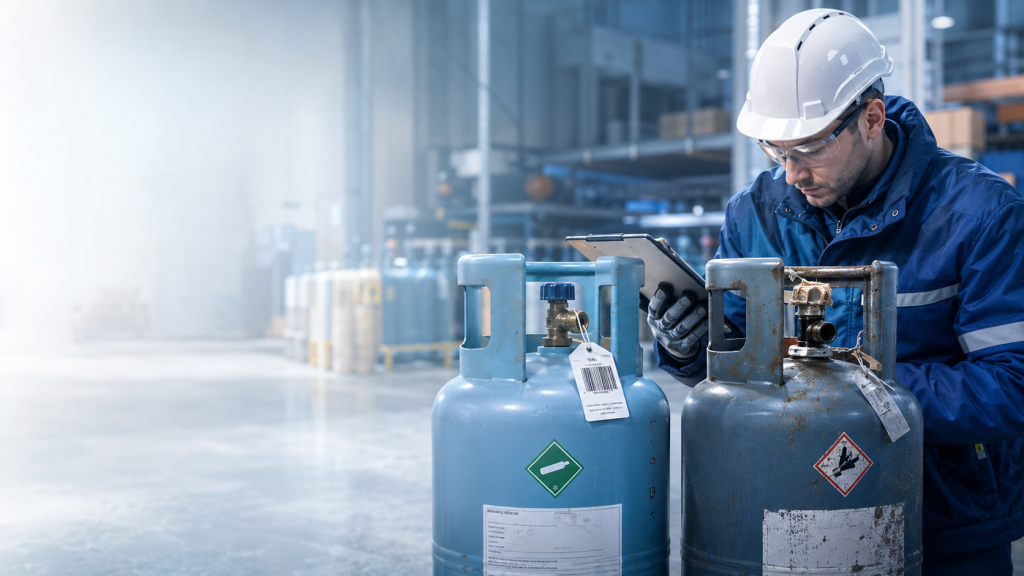
The Cheap Refrigerant in That Cylinder Could Cost You Everything.
Here Is What to Look For.
We want to tell you something that some suppliers in this industry would rather you did not know:
The refrigerant market has a serious quality problem. And it gets worse during exactly the kind of transition the industry is currently going through.
When demand for a product category spikes — as demand for next-generation low-GWP refrigerants is spiking right now — and when supply chains take time to scale, the gap between what the market wants and what legitimate suppliers can provide creates an opening. And into that opening flow substandard products, mislabelled cylinders, counterfeit gases, and recovered refrigerant that has not been properly reclaimed. It happens in every commodities market under pressure. It is happening in ours.
This blog is our honest attempt to help you protect your business. Not to sell you something — though we hope you will work with us — but because we genuinely believe that raising the knowledge level of professionals in our industry makes the whole industry better. And better informed buyers are the most effective protection against low-quality product.
What Bad Refrigerant Actually Looks Like
Substandard refrigerant is not always obvious from the outside. The cylinder may look identical to a certified product. The label may carry the right name. The price difference may seem like a smart saving. The problems reveal themselves later — in equipment performance, in unexpected failures, in warranty claims that go nowhere.
These are the contamination and quality failure modes that matter:
-
- Moisture contamination is one of the most common and damaging. Water entering a refrigerant system reacts with the refrigerant and lubricant oil to form acid. That acid eats at copper tubing, degrades seals, and ultimately destroys compressors. A system that should last 15 years can be written off in 2.
- Non-condensable gas contamination — air or nitrogen mixed in with the refrigerant — is invisible to the eye but shows up as abnormally high head pressures, reduced system efficiency, and accelerated wear on components.
- Mislabelled or diluted blends are the most insidious problem. A cylinder sold as R-32 or R-454B that actually contains a different composition will not perform as designed, will produce unpredictable system behaviour, and in some cases will create safety conditions that neither the technician nor the equipment is prepared for.
- Recovered-but-not-reclaimed refrigerant — pulled from old systems and resold without proper analysis and processing — carries all the contamination of its previous life into your client’s new system.
- Counterfeit cylinders are rare but real. They look right, they feel right, and what is inside is wrong.
The Real Maths of Cutting Corners
We understand cost pressure. Every business in this industry faces it. And on the surface, a cylinder of refrigerant that is 20% cheaper looks like a straightforward saving. But here is the honest maths:
A compressor replacement on a commercial system typically costs between 10 and 50 times the price difference between quality and substandard refrigerant. A manufacturer warranty that is voided because non-compliant refrigerant was used leaves the contractor and the client with no protection. A regulatory fine for using a non-compliant product — increasingly enforced as the phase-down regulations tighten — can exceed the cost of an entire year’s refrigerant purchasing. And a client who loses trust in you because their system failed does not come back.
The cheapest refrigerant in the market is almost always the most expensive decision you can make. We have seen it too many times to stay quiet about it.
What to Ask Any Supplier Before You Buy
Quality assurance in refrigerant procurement comes down to asking the right questions and expecting clear answers. If a supplier cannot or will not answer these questions specifically, that tells you something important:
-
- Can they provide a certificate of analysis for the specific product batch — not a generic document, but the analysis for the cylinders you are purchasing?
- Are their source manufacturers internationally certified and independently auditable? Where exactly are those manufacturers located?
- Do they offer independent refrigerant analysis services so you can verify the product yourself if you choose to?
- Do they have a documented cylinder tracking and accountability system that traces product from manufacturer to delivery?
- Are they fully compliant with UAE and regional customs regulations and chemical import requirements?
What FrostChem Global FZE Does Differently
At FrostChem Global FZE, every product we supply comes from internationally certified manufacturers. We source from vendors across the USA, Netherlands, Germany, Singapore, India, and China — all held to the quality standards we have built our reputation on over 30 years. We provide certificates of analysis with every delivery. Our refrigerant analysis services give clients the ability to verify independently what they have received. We carry established brands including BRITON, FLOE, FORANE, FROSTBERG, and HARP — each backed by full manufacturer certification.
We are not asking you to take our word for it. We are asking you to ask us the hard questions — and we will answer every one of them clearly. That is the standard every refrigerant supplier should be held to, and it is the standard we hold ourselves to.